Learn Quran with Tajweed: A Complete Guide to Correct Quran Recitation
Reviewed By Hafiz Umair Hameed: Sep 01, 2026
Every Muslim who wishes to recite the Quran the way it was revealed needs one essential skill: Tajweed. It is not an optional extra for scholars or reciters alone. It is the set of pronunciation rules that protects the meaning of the words of Allah and allows every reader, young or old, native Arabic speaker or not, to recite with accuracy and beauty.
If you have searched for how to learn Quran with Tajweed, this guide will walk you through everything you need to know: what Tajweed actually means, why it matters, the core rules you will study, and how to build a realistic learning path, whether you study locally or through online Quran classes with tajweed such as those offered at AlQuran Pro.

What Is Tajweed?
The word Tajweed comes from the Arabic root meaning to improve or to make excellent. According to Wikipedia’s entry on Tajwid, it refers to a set of rules for the correct pronunciation of Arabic letters, applied specifically to Quranic recitation, so that every letter is given its full articulation and characteristics.
In simple terms, Tajweed teaches you exactly how each letter of the Quran should sound, where it originates in the mouth or throat, how long certain sounds should be held, and how letters interact with one another when placed next to each other in a verse. Without this knowledge, subtle pronunciation errors can actually change the meaning of a word, which is why Tajweed is treated as a serious obligation rather than a stylistic preference.
Britannica’s overview of Tajwid also notes that this skill has been practiced and passed down since the earliest generations of Islam, originally taught orally from teacher to student long before it was written down as a formal science.
Why Learning Tajweed Matters
Allah instructs in the Quran to recite with measured, careful recitation, a command directly tied to the practice of Tajweed. You can read this verse and explore the full Arabic text and translation on Quran.com, a trusted digital resource for the Quran.
The importance of correct recitation is also emphasized in the sayings of Prophet Muhammad (peace be upon him). In one authentic hadith recorded in Sahih al Bukhari, the Prophet explained that a person who recites the Quran skillfully will be with the honorable, obedient angels, while a person who struggles through recitation still earns a double reward for their effort. You can read the full hadith on Sunnah.com.
This means learning Tajweed is rewarding at every stage. Beginners are not expected to be perfect immediately. What matters is consistent effort and correct guidance.
Beyond the spiritual reward, Tajweed also:
- Preserves the Quran exactly as it was revealed, without distortion of meaning
- Builds confidence in recitation during daily prayer
- Deepens concentration and reflection on the verses being recited
- Creates a stronger, more meaningful connection with the words of Allah
Core Tajweed Rules You Will Learn
Tajweed can feel overwhelming at first glance, but the rules follow a logical structure once broken down. Below is an overview of the main categories every student will study when they begin their journey, whether in a classroom or through guided online sessions.
1. Makharij (Articulation Points)
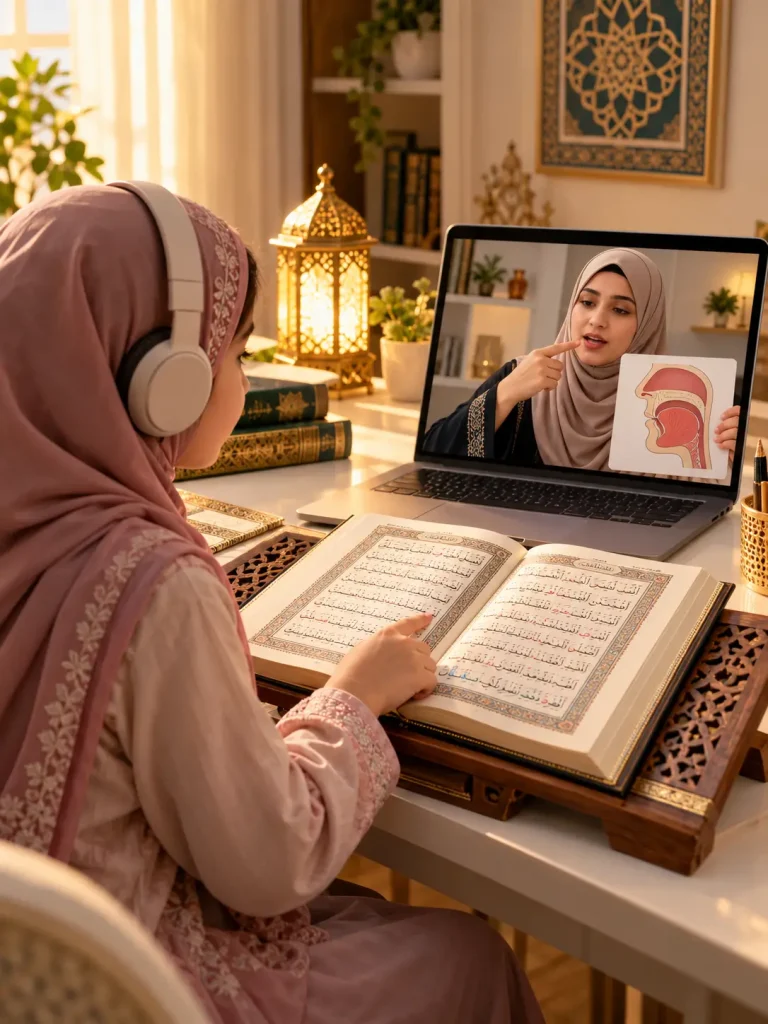
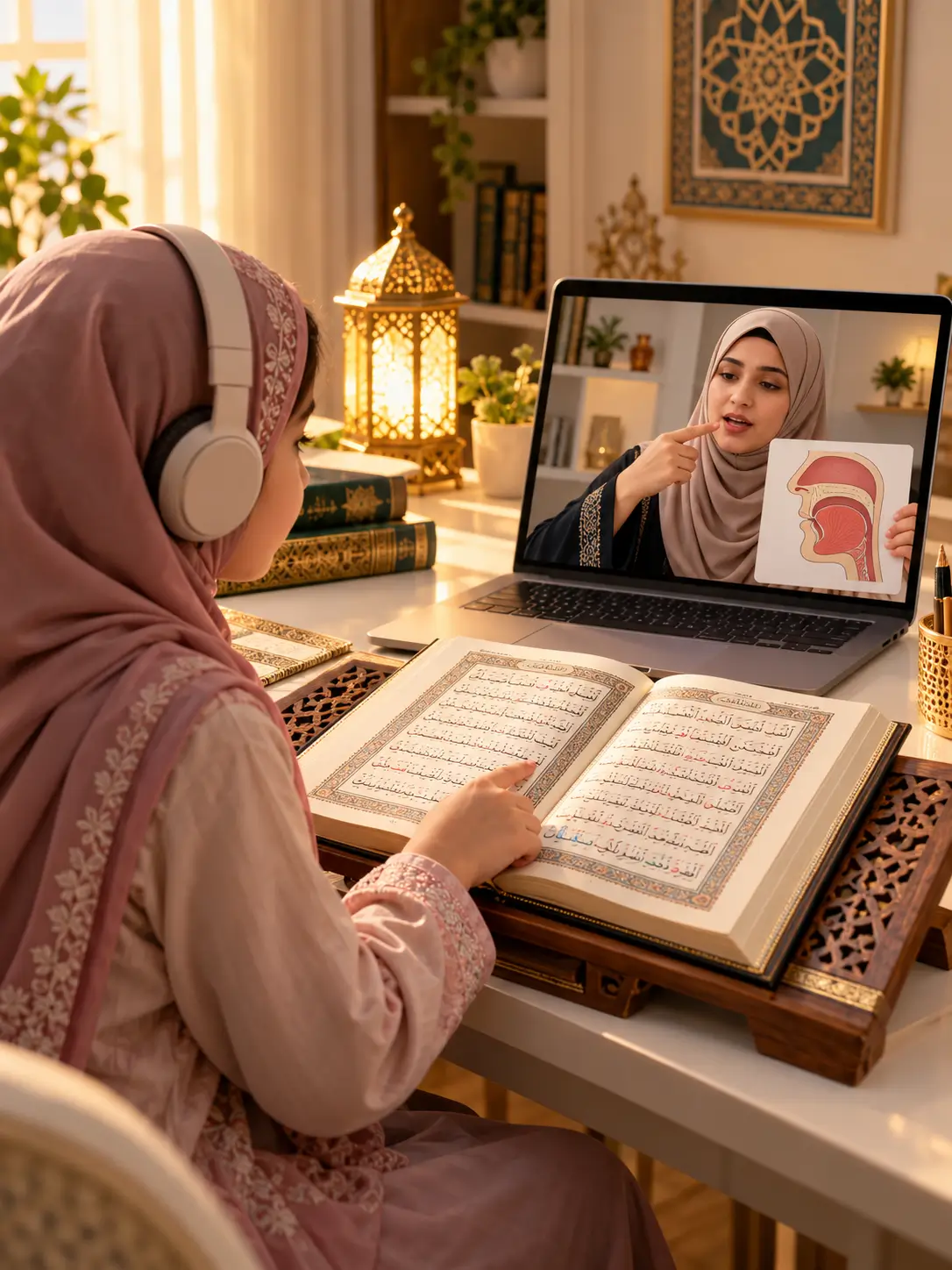
Before learning any rule, a student must understand Makharij, the exact point in the mouth or throat where each Arabic letter originates. Many letters sound similar to an untrained ear but come from completely different articulation points. Mastering Makharij is usually the very first step, often taught alongside the Noorani Qaida, the foundational booklet used to introduce Arabic letters and basic pronunciation before a student moves into full Tajweed study.
2. Noon Sakinah and Tanween Rules
This is one of the most frequently applied rule sets in the Quran. It governs how a silent noon or a tanween (a double vowel sound) should be pronounced depending on the letter that follows it. There are four main cases:
- Idhaar (clear pronunciation): the noon sound is pronounced clearly when followed by one of six specific throat letters
- Idghaam (merging): the noon sound merges into the following letter, either with or without a nasal sound called ghunnah
- Iqlaab (conversion): the noon sound is converted into a meem sound when followed by the letter baa
- Ikhfaa (hiding): the noon sound is partially hidden with a light nasal tone before moving into the next letter
3. Meem Sakinah Rules
A silent meem follows a similar pattern to noon sakinah, with three possible outcomes depending on the next letter: clear pronunciation (izhaar shafawi), merging (idghaam shafawi), or hiding with nasal tone (ikhfaa shafawi).
4. Qalqalah (Echoing Letters)
Five specific letters produce a light bouncing or echoing sound whenever they carry no vowel, especially at the end of a word or a stop. Learning to control the strength of this echo, without overdoing it, takes regular practice with a qualified teacher.
5. Madd (Elongation Rules)
Madd governs how long certain vowel sounds should be stretched. Elongation can range from two beats in natural situations up to six beats when a stronger rule applies, such as a stop combined with a heavy letter. Getting Madd wrong is one of the most common mistakes beginners make, since even a small difference in length can alter the rhythm and meaning of a word.
6. Waqf (Rules of Stopping)
Knowing where and how to pause during recitation is its own branch of Tajweed. Certain stopping points are encouraged, some are permitted only in specific situations, and others should be avoided entirely because they can break the meaning of a sentence.
For a broader academic perspective on how these recitation styles developed and differ, SeekersGuidance offers a detailed explanation of the different modes of Quranic recitation, which is a useful reference once you are comfortable with the basic rules above.
How to Learn Tajweed: Your Options
There are generally three paths available to someone who wants to learn Quran with Tajweed:
1. Local mosque or Islamic center This works well if you live near a qualified teacher and can commit to a fixed schedule. The main limitation is availability, since not every area has an experienced Tajweed instructor.
2. Self study through books, apps, or YouTube This can help with basic familiarity but is generally not sufficient on its own. Tajweed depends heavily on precise sound correction, something that is very difficult to achieve without a teacher actively listening to your recitation and correcting you in real time.
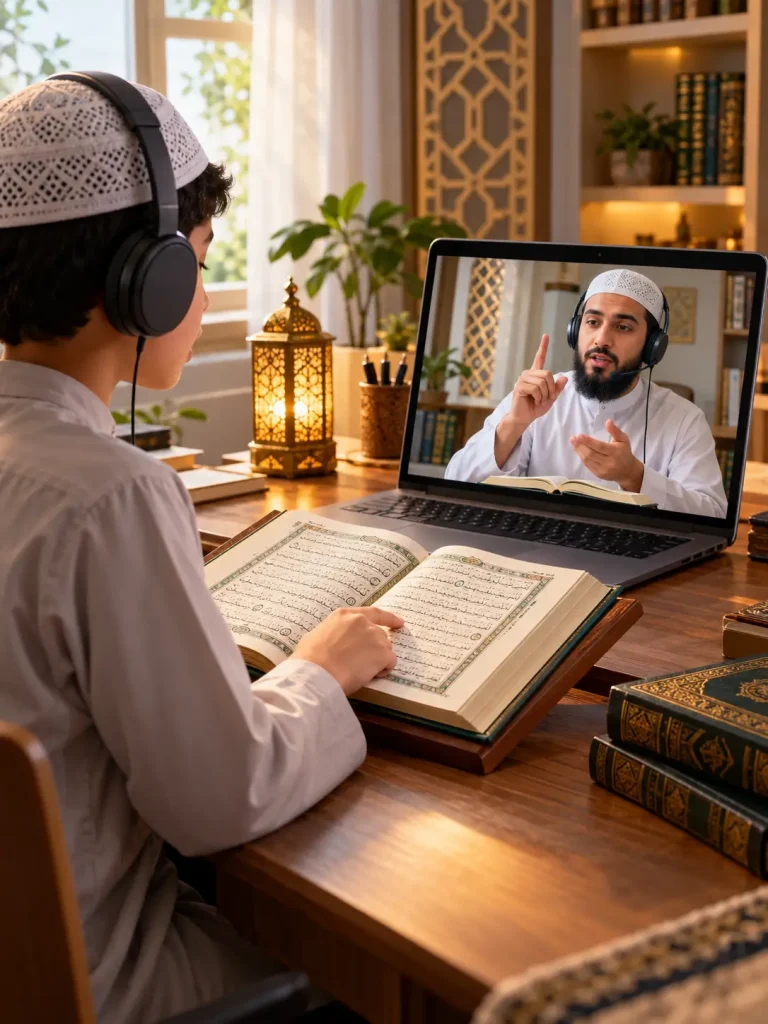
3. Structured online classes This has become the most practical option for most students today. A well designed quran tajweed online classes program gives you the benefit of a live, qualified teacher without the need to travel, while still allowing correction of your recitation in real time through video or audio sessions.
What to Expect From Quality Online Tajweed Instruction
If you decide to pursue tajweed lessons online, look for a program that includes the following:
- One to one sessions, not just pre recorded videos, so your specific pronunciation mistakes can be corrected
- A structured curriculum that moves from Makharij and basic letter recognition through to advanced Madd and Waqf rules
- Flexible scheduling that fits your time zone and daily routine
- Teachers who can explain rules in your native language while still focusing on correct Arabic pronunciation
- Regular progress tracking so you and your teacher can see measurable improvement over time
At AlQuran Pro, our program is designed around exactly this structure. Every student receives individual attention from a qualified tutor, with lesson pacing adjusted to their current level, whether they are complete beginners or already reading the Quran and want to refine their recitation.
Class Type
One-on-One
Class Duration
30 minutes
Age Level
At least 5 Years
Gender
Both Male/Female
Who Should Learn Tajweed?
Tajweed is suitable for every age and every level of prior knowledge:
- Children: Early exposure helps build correct pronunciation habits from the start, and our online Quran classes for kids are designed specifically around younger learners with interactive, age appropriate teaching methods.
- Adults: It is never too late to begin. Many adult learners join our online Quran classes for adults to correct recitation habits they have carried for years or to start entirely from scratch.
- Beginners with no Arabic background: Starting with Noorani Qaida before moving into Tajweed ensures a strong foundation.
- Advanced students: Those who already recite fluently often continue their journey with a Quran memorization course once their Tajweed is solid, since accurate pronunciation makes memorization far more reliable.
Some students also choose to pair Tajweed study with a broader Arabic language course, since understanding Arabic grammar and vocabulary naturally reinforces correct pronunciation and comprehension of the verses being recited.
A Realistic Learning Timeline
Every student progresses at a different pace, but a general path looks like this:
- Weeks 1 to 4: Arabic letter recognition and basic Makharij (often through Noorani Qaida if starting from zero)
- Months 2 to 3: Noon Sakinah, Tanween, and Meem Sakinah rules
- Months 3 to 4: Qalqalah and introduction to Madd
- Months 4 to 6: Full Madd rules, Waqf, and applied recitation practice across full surahs
Consistency matters more than speed. A student who practices twenty minutes daily with corrections from a teacher will progress faster than one who studies for hours occasionally without guidance.
Students’ Feedback About AlQuran Pro Quran Academy
Start Learning Quran with Tajweed Online Today
Correct Quran recitation is a lifelong skill worth investing in properly. Whether you are a parent looking to give your child a strong foundation, or an adult ready to finally learn the Quran with tajweed online at your own pace, guided instruction from a qualified teacher makes all the difference between struggling alone and genuinely mastering the rules.
At AlQuran Pro, we offer a free trial class so you can experience what makes our teaching approach effective before committing to a course. Our certified male and female tutors serve students across the world, including dedicated support for learners in Virginia, Texas, New York, Florida, and beyond.
If you are ready to experience the best online tajweed course tailored to your pace and schedule, book your free trial class today and take the first step toward reciting the Quran with confidence, accuracy, and beauty.
(No Advance Payment)