Arabic Language Course Online for Beginners in New York
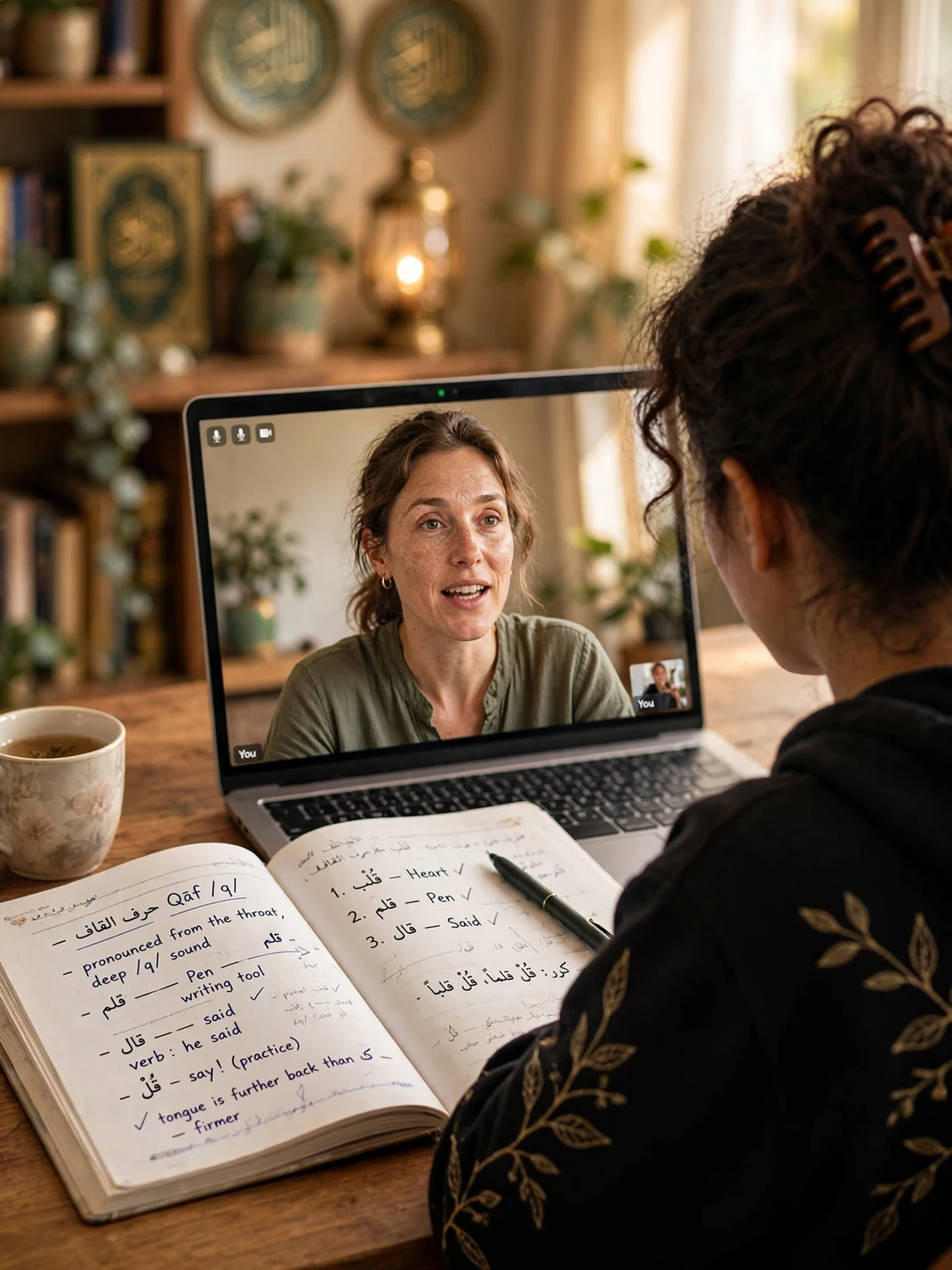
Maybe you can sound out the letters but not the words. Or you have never opened an Arabic book and want a calm place to begin. Either way, our Arabic language course is live and one-on-one: a teacher you can see and hear, 30 minutes at a time, from your home anywhere in New York. Book a free trial class and see how it feels before you decide anything.
Why Does Learning Arabic Feel So Hard When You Are Just Starting?
Three things get in the way: an unfamiliar script, not knowing which Arabic to learn,
and sounds English does not have. A live teacher who corrects you as you speak makes each
one far easier to handle.
What’s Included in Every Arabic Language Class
Every lesson follows the same simple setup, so you know exactly what to expect before you book your free trial.
Live 1-on-1 Sessions
One teacher, one student, 30 minutes, live. Say a word out loud and get corrected right then. Not a recording and not a group class.
Meaning, Explained in English
Complete beginner, or reading the letters slowly? Your teacher begins where you actually are, not where a textbook assumes you are.
Male or Female Teacher
You choose the teacher, so you can concentrate on learning.
Free Trial, No Advance Payment
Sit in on a real lesson before you spend anything. Payment comes at the end of the month, never in advance.
How Do I Start an Arabic Language Course Online, Step by Step?
It takes three steps to get from a message to your first live lesson, and you do not need to pay or know any Arabic to begin.
Book a Free Trial Class
Message us, pick a male or female teacher and choose a slot that works around your job, family or commute. The trial costs nothing
Find Your Starting Point
In the trial, your teacher listens to how you read now and what you want Arabic for: prayer, the Quran, family or work. Cannot read the letters yet? That is a perfectly normal place to start.
Learn Step by Step
Lessons build from letters and sounds to words and short sentences. You decide how many days a week you attend.
What Will I Learn in an Arabic Language Course for Beginners?
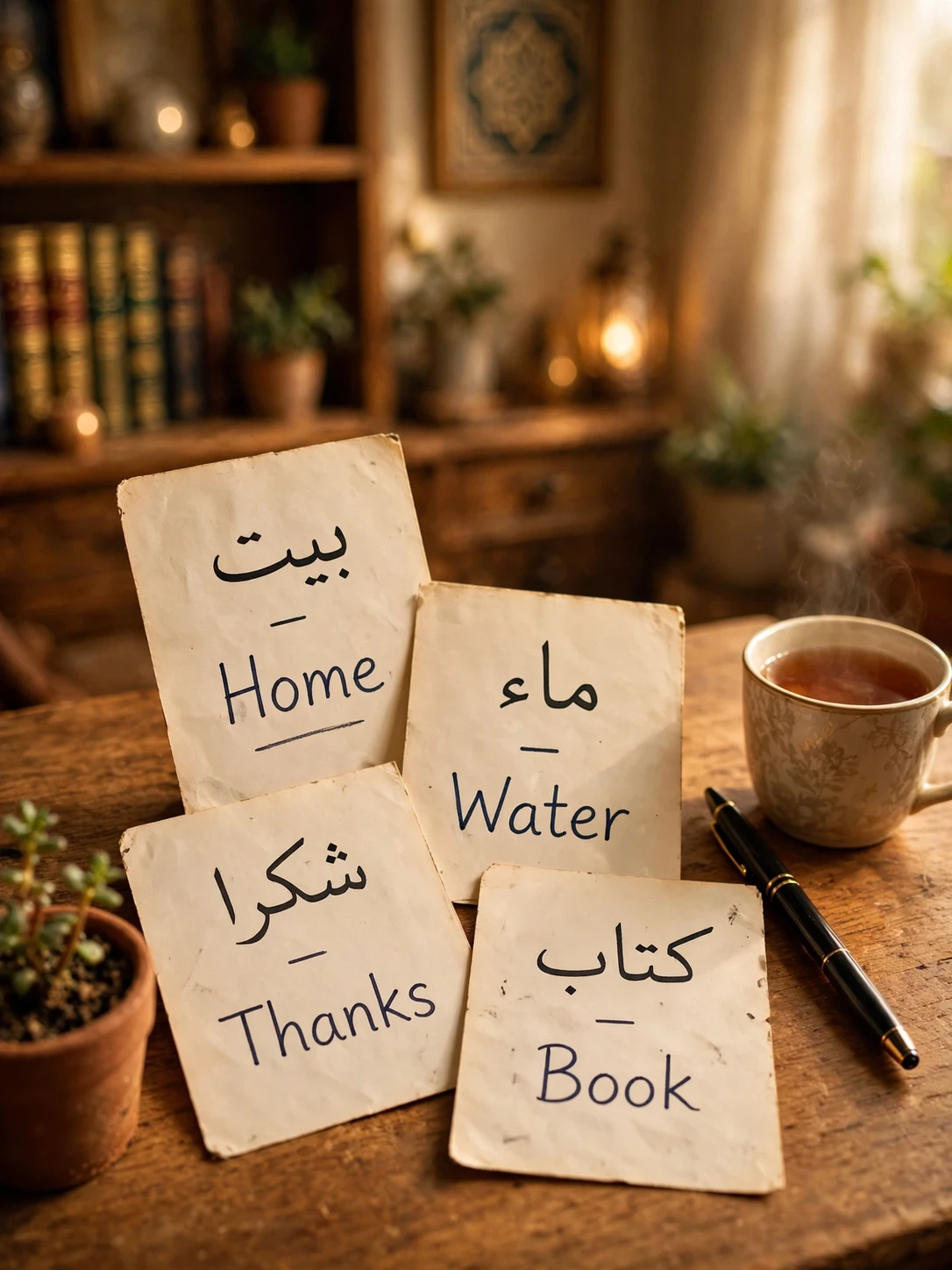
Here is the path most beginners follow, from the first letter to the first sentences. Your teacher adjusts the pace to you.







Which Quran Translation Path Is Right for You?
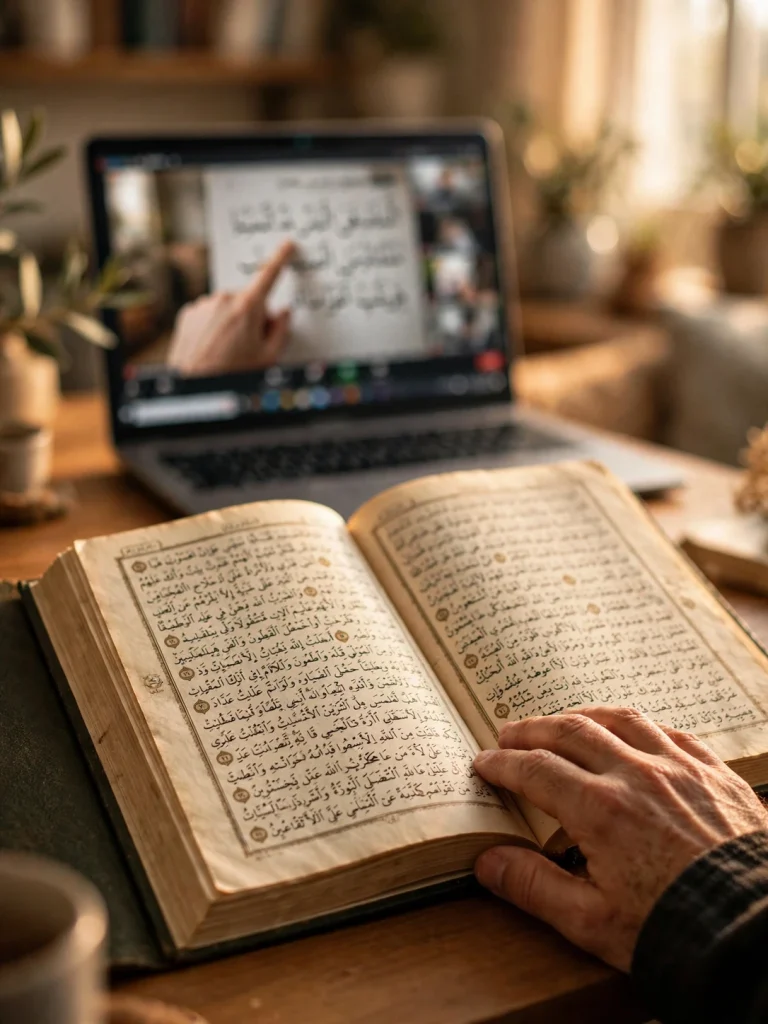
The best place to begin depends on what you already know and what you want to understand. You can start with the surahs you already recite, focus on word meanings, or gradually move toward deeper understanding of the Quran.
| Your Current Situation | A Good Starting Point | Main Focus | What You Can Work Toward |
|---|---|---|---|
| I recite the Quran but do not understand what I am saying | Start With the Surahs in Your Salah | Al-Fatihah and short surahs, explained word by word and verse by verse in English. | Understand the meaning of the words you already recite regularly in prayer. |
| I know little or no Arabic | Begin With Word-by-Word Translation | Connect individual Arabic words with their English meanings and learn common Quranic vocabulary. | Start recognising familiar words and understand how they build the meaning of a verse. |
| I can read Arabic but struggle with the meaning | Verse-by-Verse Translation | Read the Arabic wording alongside the English meaning with teacher guidance. | Move from simply reciting verses to understanding what they communicate. |
| I want to understand difficult words that appear repeatedly | Quranic Vocabulary | Learn common Arabic words and expressions that appear throughout the Quran. | Recognise familiar vocabulary when you encounter it in other verses and surahs. |
| I want to understand the context behind a verse | Translation With Helpful Context | Explore the meaning of a verse with brief background information when it helps make the message clearer. | Understand the relationship between the words, message and context of a verse. |
| I want deeper understanding beyond a basic translation | Translation + Tafseer | Learn the difference between translation and Tafseer while exploring fuller explanations where appropriate. | Develop a deeper understanding of Quranic meaning and context. |
| I want to connect the Quran with everyday life | Surah Lessons & Reflection | Explore the lessons, morals and practical meaning found within the passages being studied. | Reflect on Quranic teachings and consider how their lessons relate to everyday life. |
Your teacher can connect the English meaning to the original Arabic words and begin with the surahs you already know. Your starting point can then develop according to your reading ability, goals and preferred depth of study.
Prayer Surahs → understand what you already recite • Word by Word → learn recurring vocabulary • Verse by Verse → understand complete meanings • Tafseer → explore deeper context
Who Is Our Arabic Language Course For?
You do not need any Arabic, and you do not need a big goal. If all you know is that you want to begin, that is enough. Tell your teacher what you hope to do with Arabic, and the free trial will show you how a 30-minute lesson works.
How Much Does an Online Arabic Language Course Cost?
No guessing games. The full details are on our Fees & Schedule page, and you can read them before you contact us.
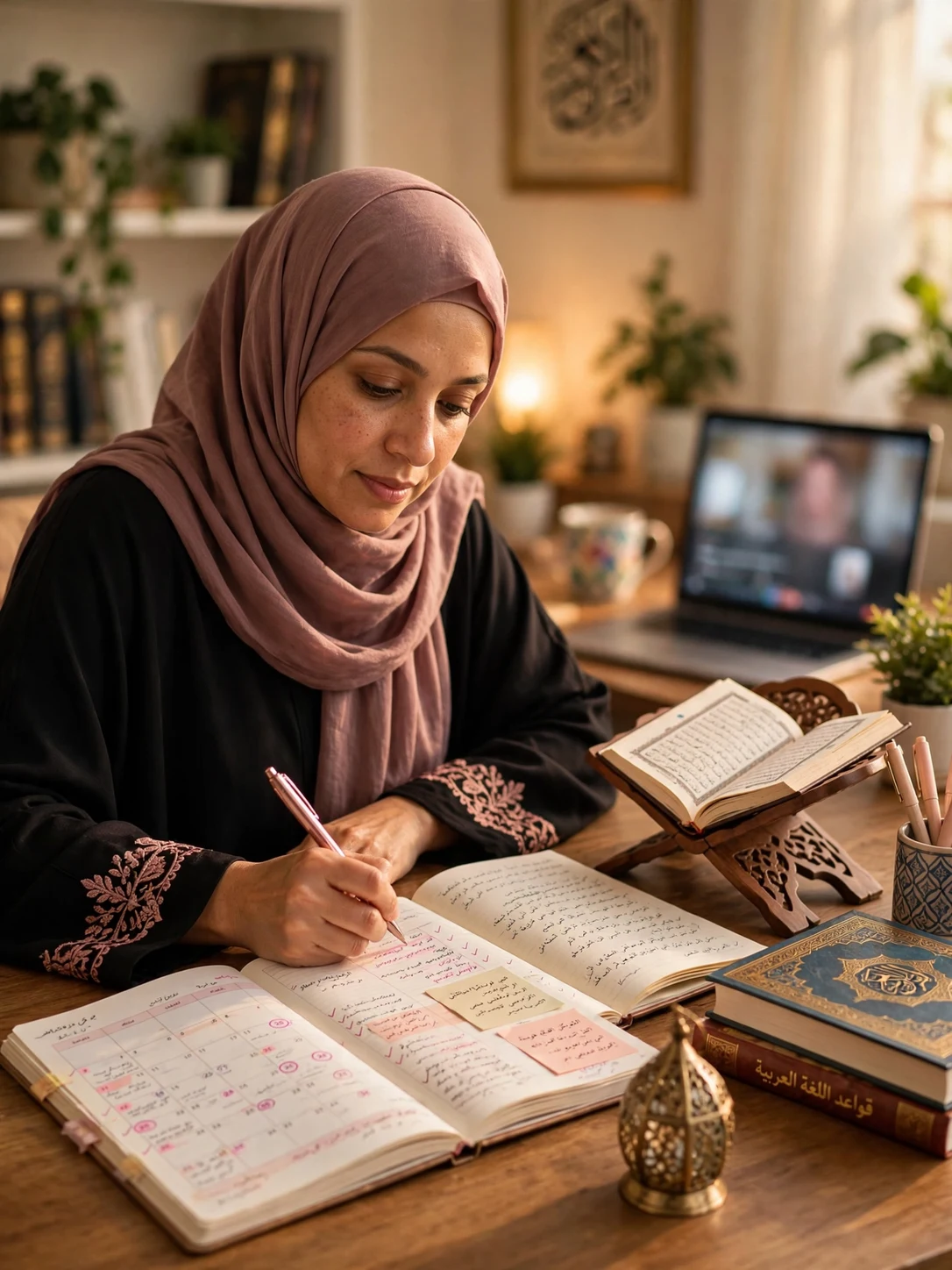
How the Online Quran Classes Work
Class Type
One-on-One
Class Duration
30 minutes
Age Level
At least 5 Years
Gender
Both Male/Female
(No Advance Payment)
What Learners Appreciate About Quran Translation Classes
Understanding the Quran can become much more meaningful when learners move beyond recitation and explore the meaning of the words, the context of a verse and the lessons behind each Surah. This course is designed around that journey.
Studying the Quran word by word can help learners recognise familiar Arabic terms and understand how the meaning of a verse comes together, rather than relying only on a complete English translation.
Word-by-Word TranslationTranslation becomes easier to understand when a lesson also introduces the context behind a verse. This can help learners see how the wording, message and lesson relate to one another.
Context & MeaningLearning the meaning behind verses can make it easier to reflect on the lessons and morals of each Surah and consider how Quranic teachings can be applied to everyday life.
Lessons & ReflectionLive one-to-one lessons give learners time to ask about unfamiliar words, verse meanings and the context of what they are studying, followed by practice and review between lessons.
One-to-One GuidanceThe learning path can begin with basic word-by-word translation, move into short explanations and, for learners who want greater depth, progress toward translation with detailed Tafseer.
Common Questions About Learning Arabic Online
Short, honest answers for anyone starting Arabic from zero.
Ready to Read Your First Arabic Words?
Your first class is free, nothing is due in advance, and you are under no pressure to continue. Tell your teacher where you are with Arabic, see how a live lesson feels, then decide.