Online Quran Classes for Beginners in New York
Never read a single line of Arabic? That is exactly who this course is for. Whether you are a parent choosing a first Quran class for your child, an adult who never had the chance to learn, or a new Muslim taking your first steps, our live one-on-one classes start from where you actually are and move at your pace, on a schedule that fits life in New York.
Why Do Beginners Struggle to Start Learning the Quran?
What’s Included in Every Beginner Quran Class
No hidden extras and no guesswork. Here is what every beginner gets from the first lesson, so you know what to expect before you book your free trial in New York.
Live 1-on-1 Sessions
Every class is a private 30-minute session with one teacher, live, not a recording.
Start at Your Real Level
Never read Arabic? You begin with the letters. Already know a few? Your teacher skips what you have covered.
Male or Female Teacher
Choose the teacher you are most comfortable learning with, for yourself or your child.
Explained in English
Lessons are explained in English, with Arabic and Urdu also available, so nothing gets lost in translation.
How to Read the Quran with Tajweed Online, Step by Step
Three steps from your first hello to your first lesson plan. No advance payment and no commitment until you are ready.
Book a Free Trial Class
Meet a teacher, try a real lesson, and ask anything you like. No advance payment.
Find Your Starting Point
Your teacher checks whether you should begin with the letters (Noorani Qaida) or can move straight to reading.
Learn Step by Step, at Your Pace
Weekly one-on-one lessons take you from letters to sounds to words to reading, with revision built into every class.
What Beginners Actually Learn, Step by Step
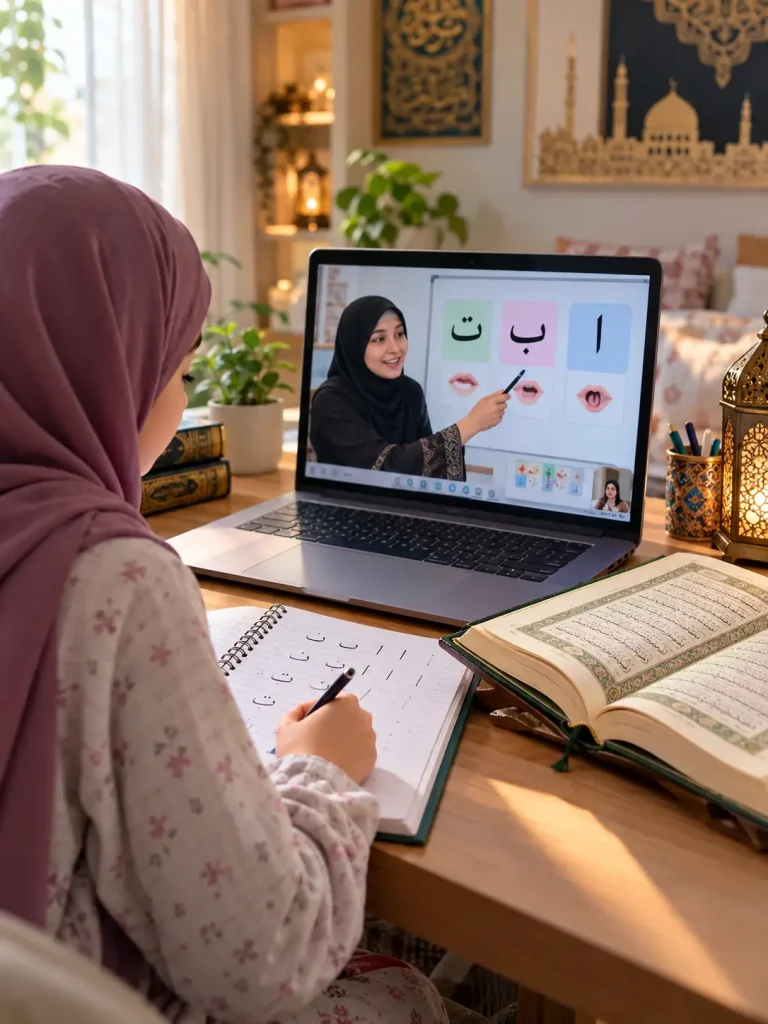
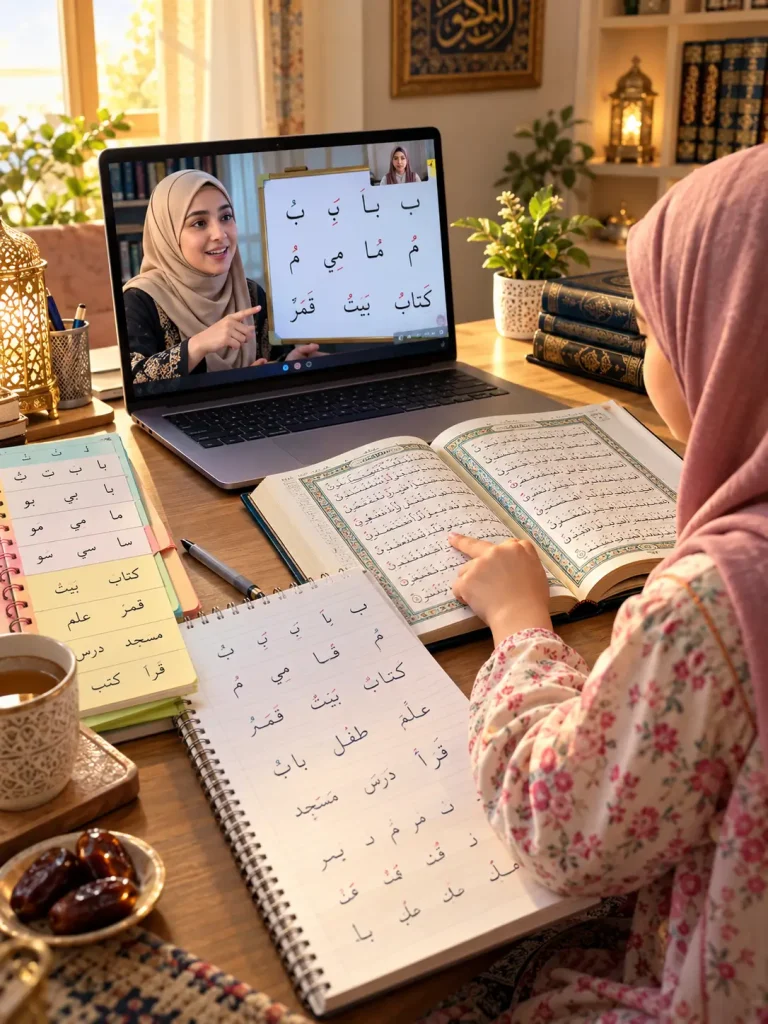
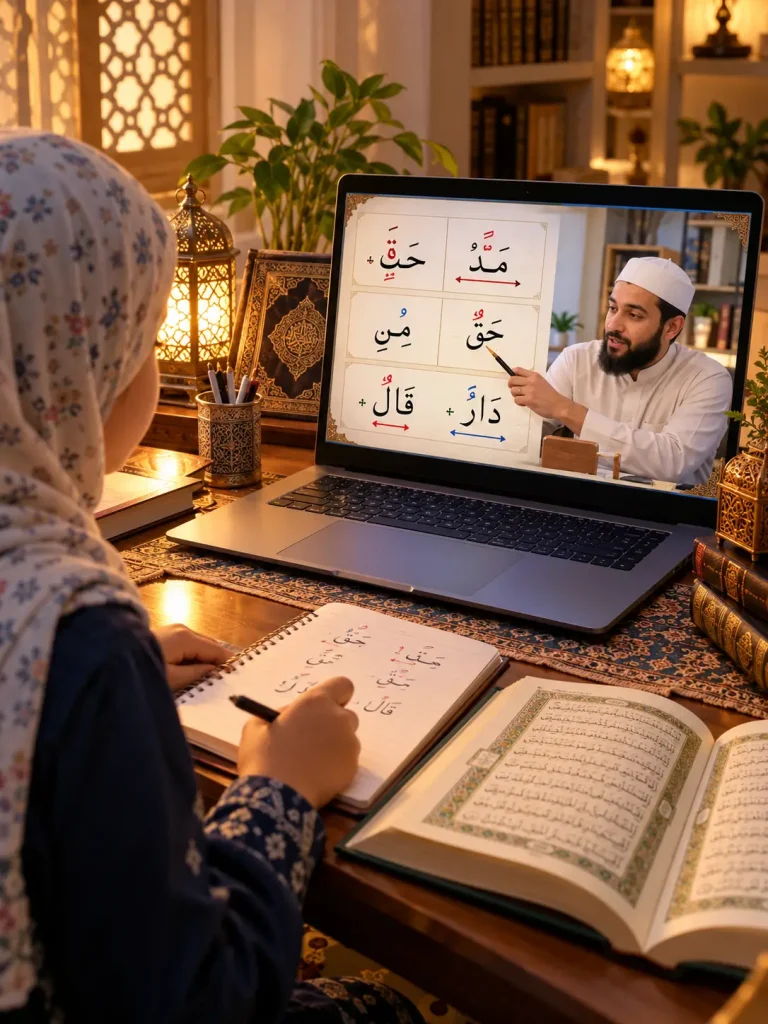
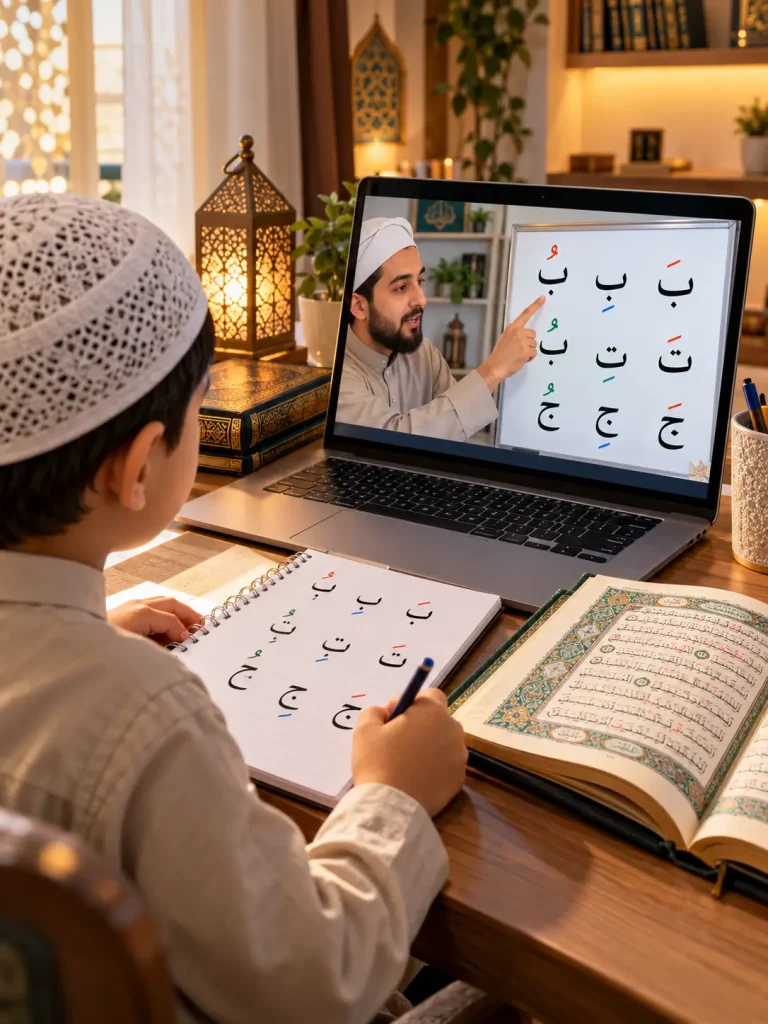
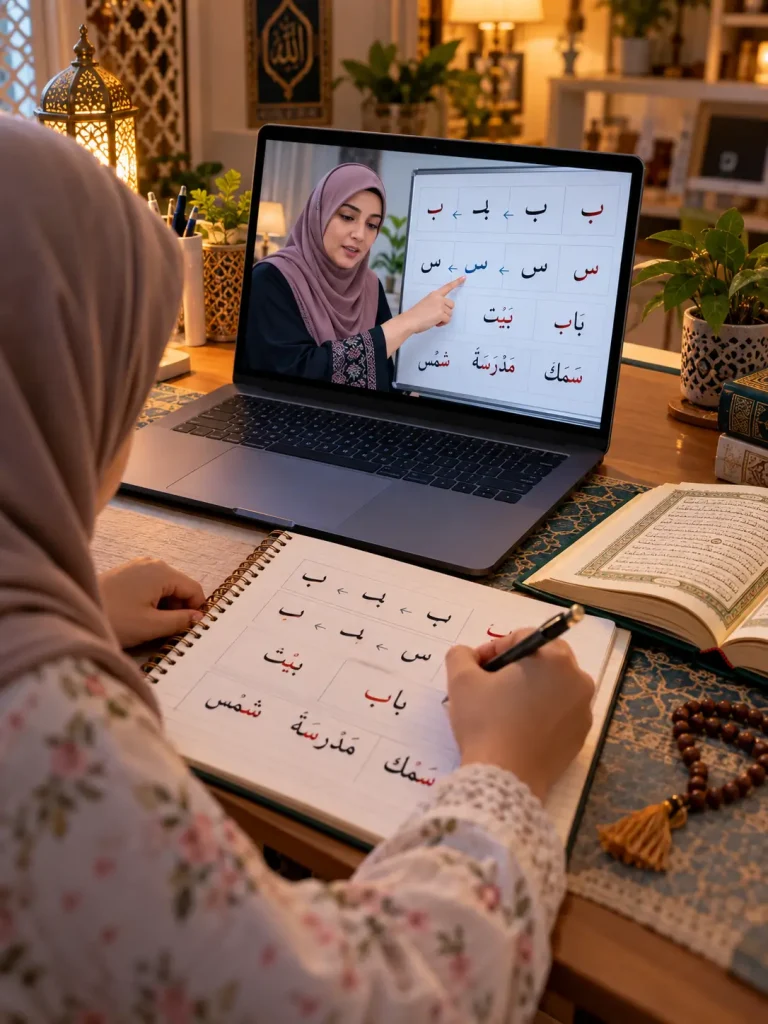
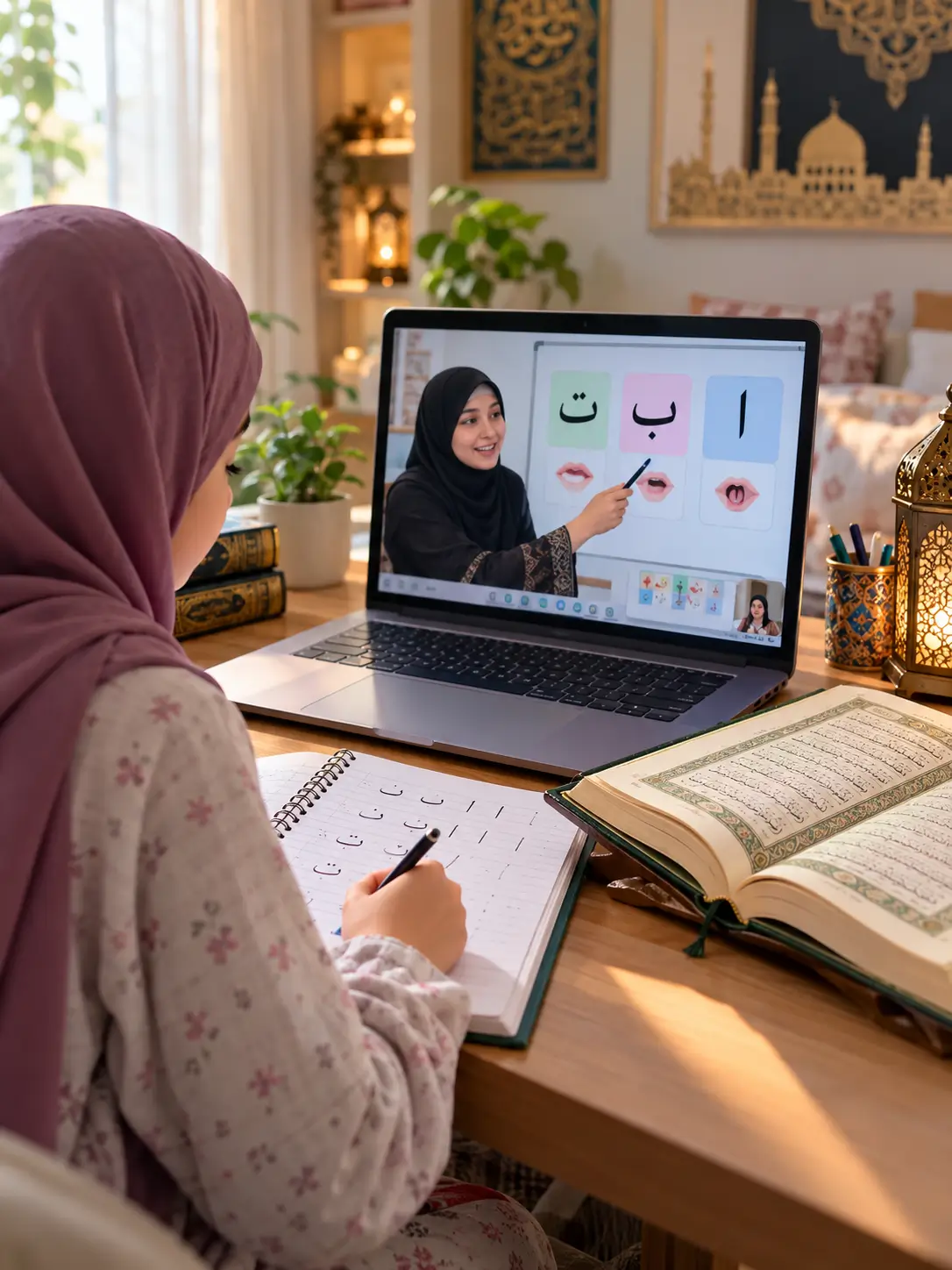
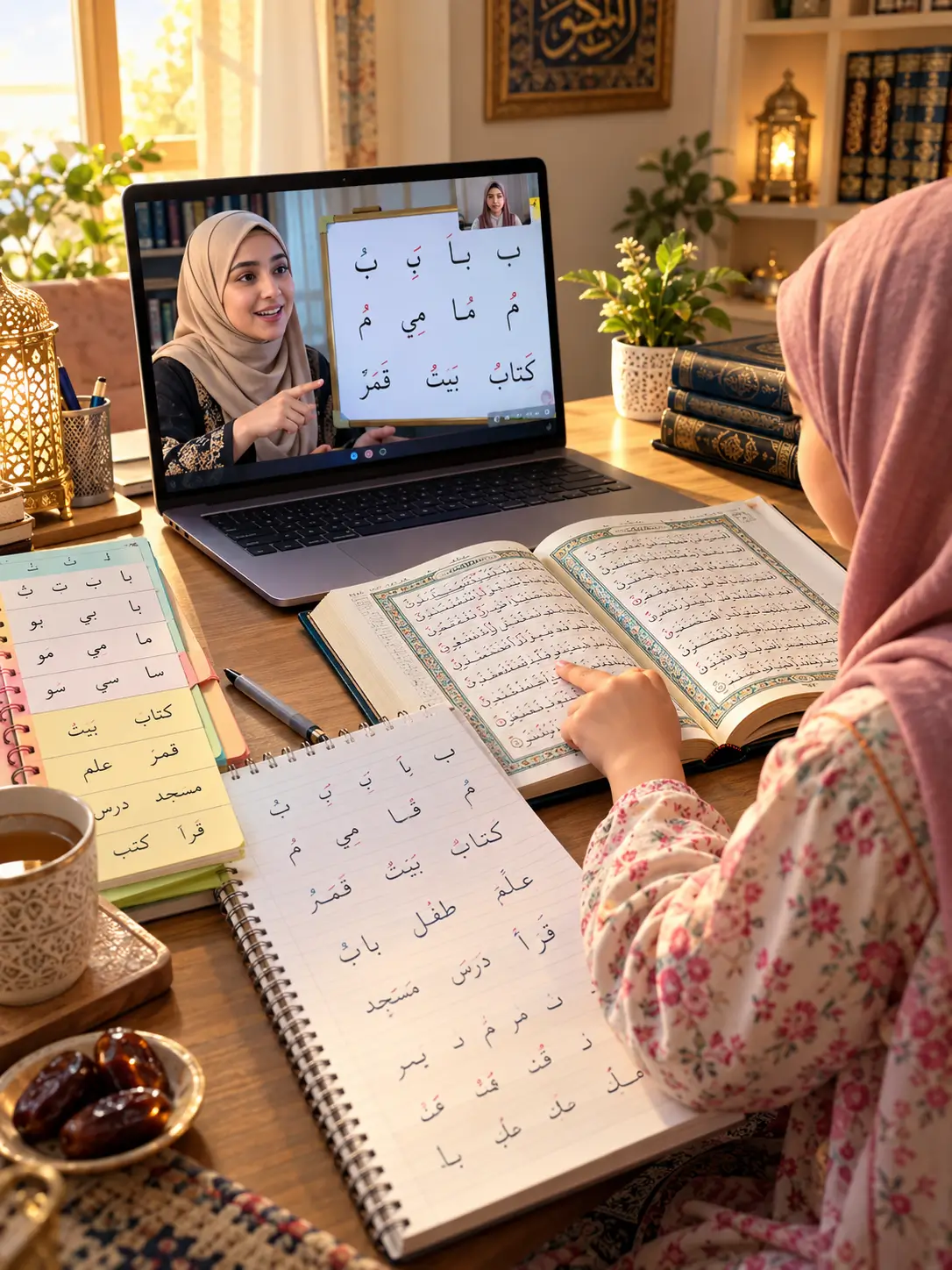
Noorani Qaida is the classic starting point and forms the backbone of this course. What we add around it is the guidance: an assessment, a pace set by you, and revision in every lesson. Here is the path most beginners follow:

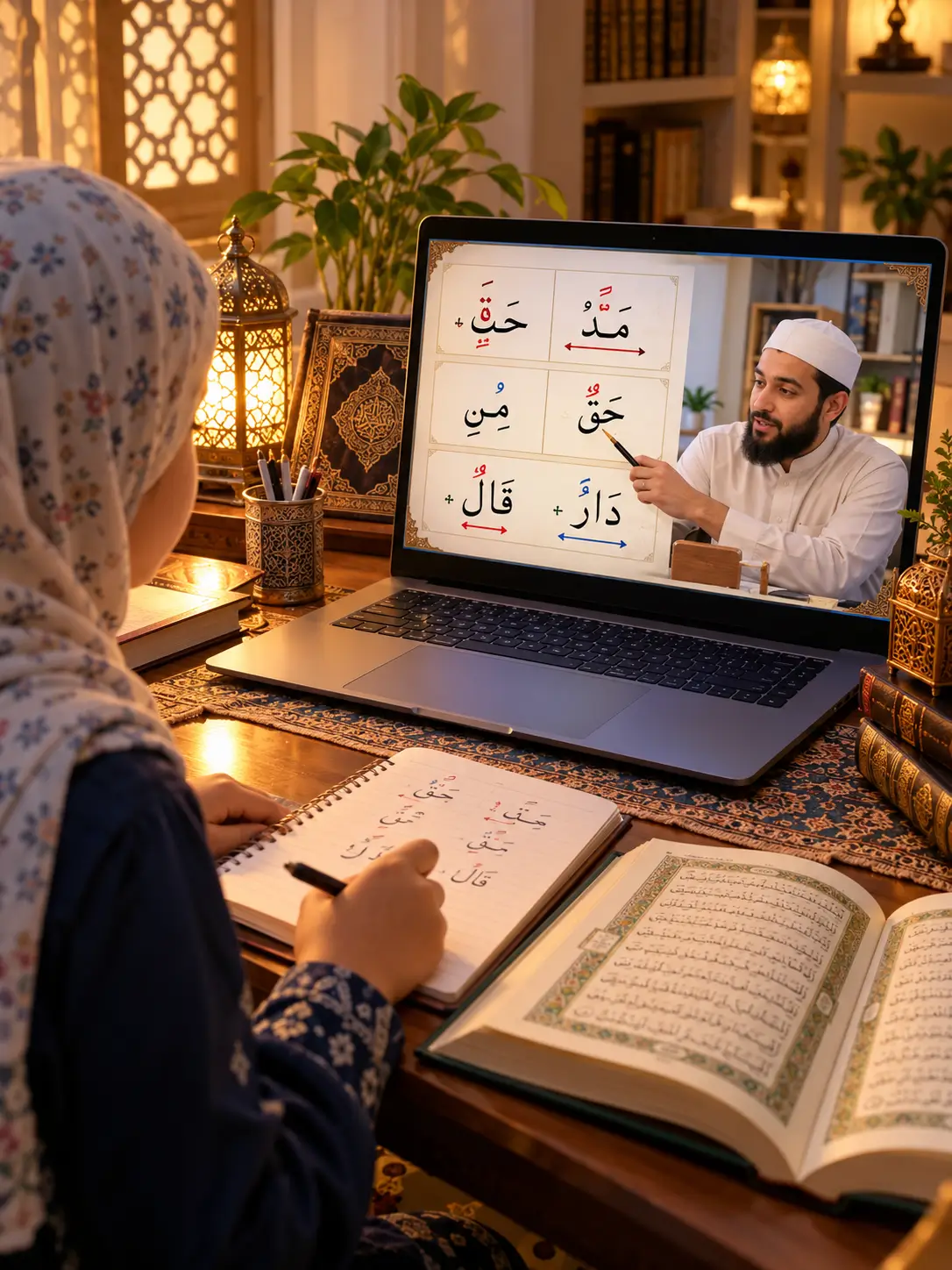
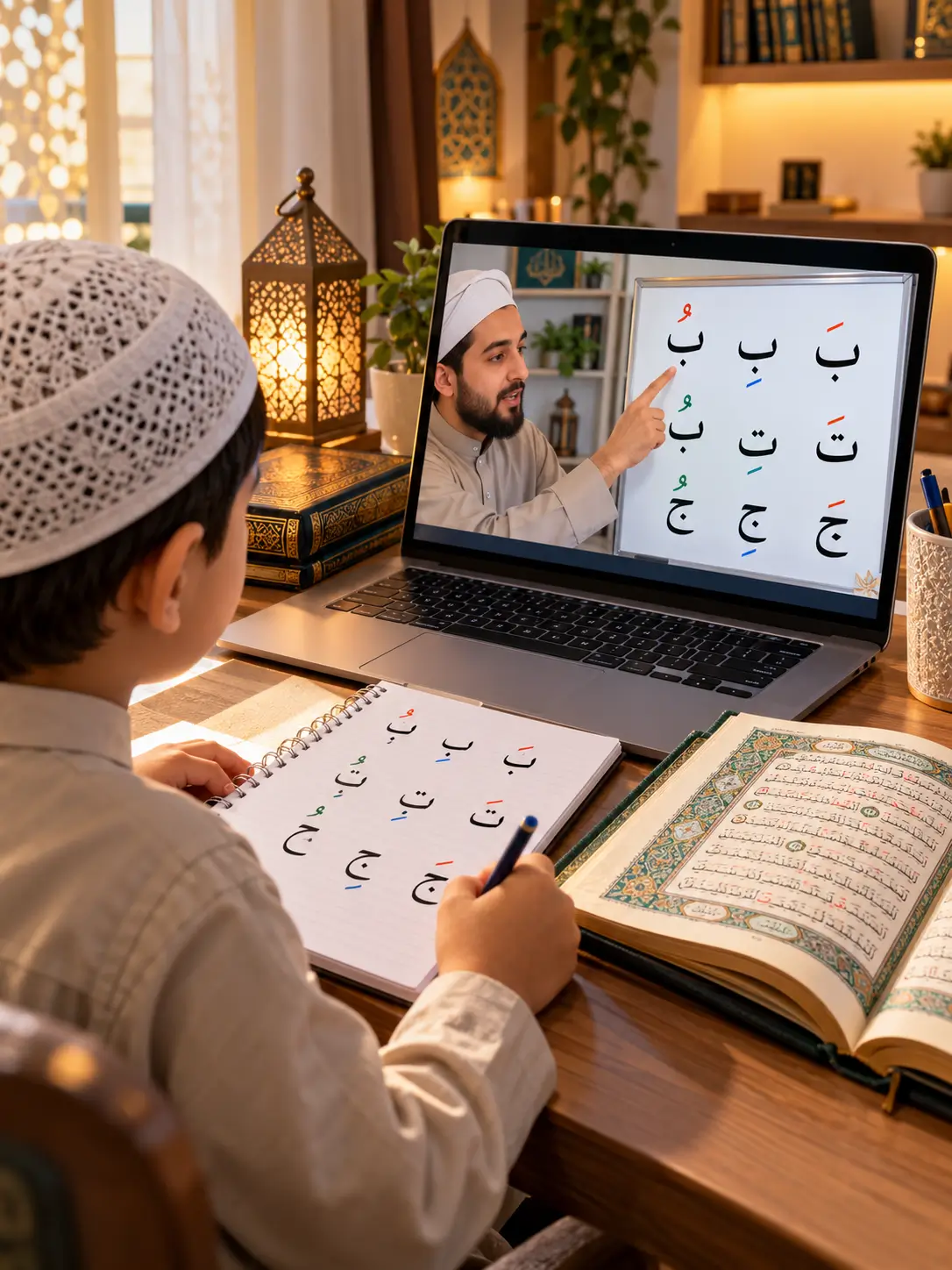
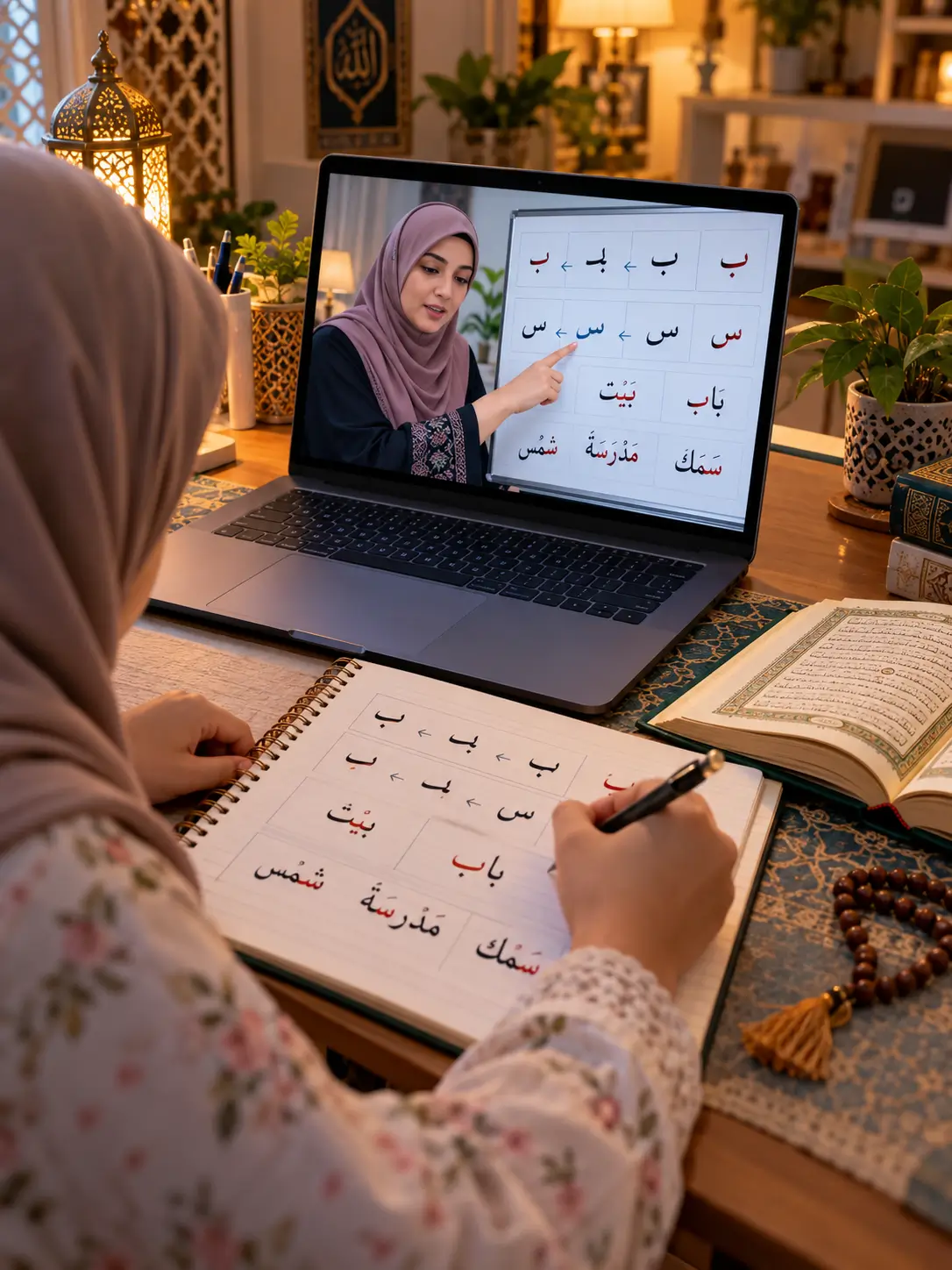
What Do Beginners Learn First in Quran Classes?
A complete beginner does not need to know where to start. The learning path begins with Arabic letters and sounds, then builds toward connected words, Quran reading and foundational Tajweed through guided practice and revision.
| Learning Stage | What You Learn | What You Practice | Next Step |
|---|---|---|---|
| 01 Arabic Letters & Sounds | Learn the Arabic letters and the correct sounds associated with them. | Recognizing individual letters and practising their correct pronunciation with a teacher. | Move toward understanding how letters appear and connect within words. |
| 02 Letter Shapes & Connections | Learn how letters can change shape depending on their position and how Arabic letters join together. | Reading letters in different positions and recognising joining patterns, including letters that do not connect to the following letter. | Build toward reading vowelled letters and simple connected forms. |
| 03 Harakat & Short Vowels | Learn Fatha, Kasra and Damma and how these marks affect the sound of a letter. | Reading Arabic letters with short vowel sounds instead of recognising letters only by their shape. | Continue into additional Quran reading markers and connected words. |
| 04 Sukoon, Tanween, Tashdeed & Madd | Understand common Quran reading markers including Sukoon, Tanween, Tashdeed and Madd. | Applying each rule gradually while reading increasingly complex Arabic forms. | Use the learned patterns when joining letters and reading words. |
| 05 Joining Letters Into Words | Learn how separate Arabic letters come together to form real words. | Reading connected words instead of decoding each individual letter separately. | Develop greater confidence moving from basic forms toward Quranic reading. |
| 06 Pronunciation & Foundational Tajweed | Begin building correct pronunciation and foundational Tajweed habits from the earliest lessons. | Reading aloud while receiving teacher correction on pronunciation and recitation. | Continue developing more confident and accurate Quran reading. |
| 07 Revision & Quran Reading | Review previously learned skills and apply them while reading the Quran. | Revising previous lessons, reading connected text and practising recitation with teacher guidance. | Once reading becomes comfortable, students can progress toward learning paths such as Tajweed, Hifz or Quran translation. |
Some students begin with the first Arabic letter, while others already know basic letters and can move ahead. AlQuran Pro uses the free trial and initial assessment to identify the appropriate starting point rather than forcing every learner through the same fixed stage.
Who Are Our Online Quran Classes for Beginners For?
Adult beginners and new Muslims often carry the extra pressure of feeling they should have learned this years ago. In a private one-on-one class there is nobody to compare yourself with, and classes are booked around your working week. Women can choose a female teacher through our Quran classes for ladies or adults classes.
Parents can also learn alongside their child. And if you learned to read the Quran years ago but have lost your fluency, your first lesson includes an assessment, so you pick up exactly where your reading stops. Not sure about the letters yet? Start with Noorani Qaida.
How Much Do Beginner Online Quran Classes Cost?
We keep beginner classes affordable and work with parents and adult students individually according to their financial circumstances. Cost should never be the barrier between you and reading the Quran.

How the Online Quran Classes Work
Class Type
One-on-One
Class Duration
30 minutes
Age Level
At least 5 Years
Gender
Both Male/Female
(No Advance Payment)
What Students & Parents Say About Learning Quran With Us
Starting Quran reading can feel very different for a child, a parent helping at home, or an adult beginning from zero. Here are a few pieces of feedback currently shared on AlQuran Pro’s beginner Quran classes page.
She shared her appreciation for the website and explained that it was helping both her and her son with their Quran learning and support.
He shared that his daughter’s Quran lessons were continuing positively with her tutor and contacted the academy about renewing her learning package.
Her feedback described a very positive experience with the tutor and indicated that she would recommend the academy to others interested in Quran learning.
His feedback highlighted the quick support provided through AlQuran Pro and expressed appreciation for the team behind the learning service.
These feedback summaries are based on testimonials currently displayed on AlQuran Pro’s beginner Quran classes page. Individual experiences may vary depending on the student’s starting level, attendance, practice, and learning needs.
: Common Questions About Online Quran Classes for Beginners
Quick answers before you book your first class.
Ready to Take Your First Step With the Quran?
Every beginner starts the same way: one free trial class, no advance payment, no obligation to continue. Meet your teacher and hear how the first lesson works before you decide on anything.