Online Quran Classes for Kids in New York
Your child can start reading the Quran from your own living room, with one teacher who knows their name, their pace and exactly where they stopped last time. Our live one-on-one online Quran classes for kids fit around school, homework and after-school activities anywhere in New York, and you do not need any Arabic to enrol your child.
Why Is It Hard for Kids to Start Learning the Quran?
What’s Included in Every Kids Quran Class
No hidden extras and no guesswork. This is what every child gets from the first lesson, so you know what to expect before you book a free trial in New York.
Live 1-on-1 Sessions
Every class is a private 30-minute live session between your child and one teacher. Not a recording, not a group.
Start at Your Real Level
A child who has never seen Arabic begins with the letters. A child who already reads a little skips what they know and continues from there.
Male or Female Teacher
You choose the teacher your child is most comfortable learning with.
Explained in English
Try a real class first. Billing is at the end of the month, so nothing is due upfront.
What Happens in a Free Trial Class for Kids, Step by Step?
Three steps from your first message to your child’s first lesson plan. No advance payment and no commitment until you are ready.
Book a Free Trial Class
Choose a male or female teacher, pick a time that suits your child’s school week and let them try a real live lesson. Ask us anything you like before you decide.
Find Your Starting Point
During the trial the teacher listens to your child and sees whether they should begin with the Arabic letters or can move on to reading. You hear the suggestion straight away, so you leave with a clear next step.
Learn Step by Step, at Your Pace
Lessons build on each other, from letters to sounds to words to reading, and the teacher slows down or moves ahead depending on how your child is doing.
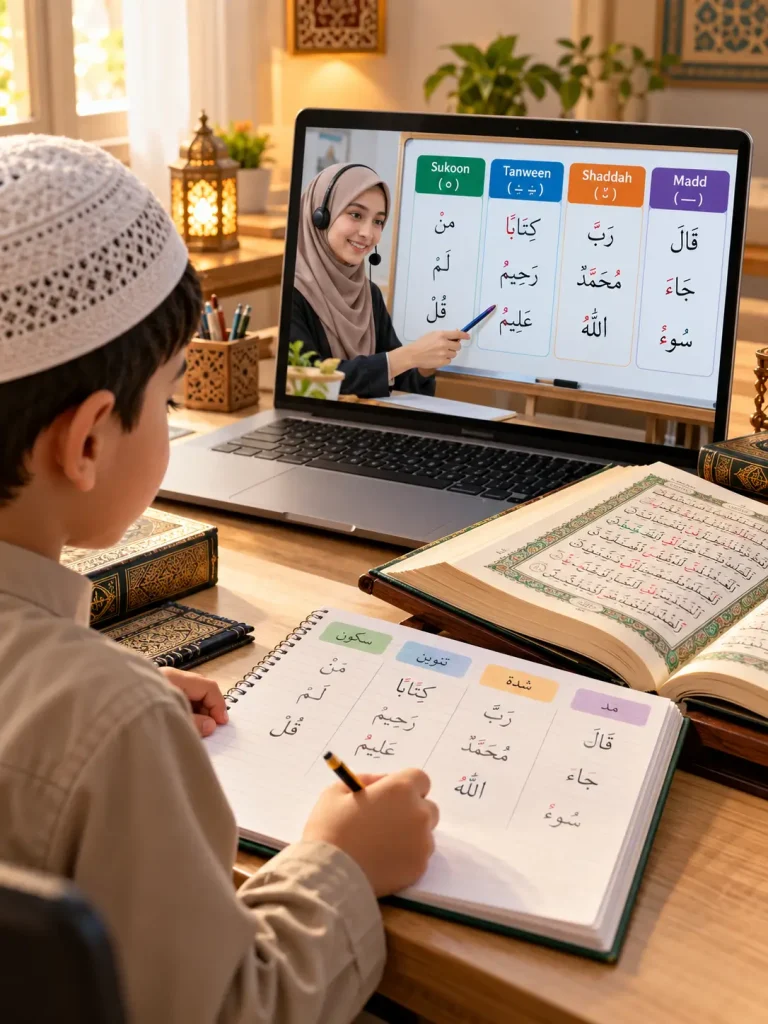
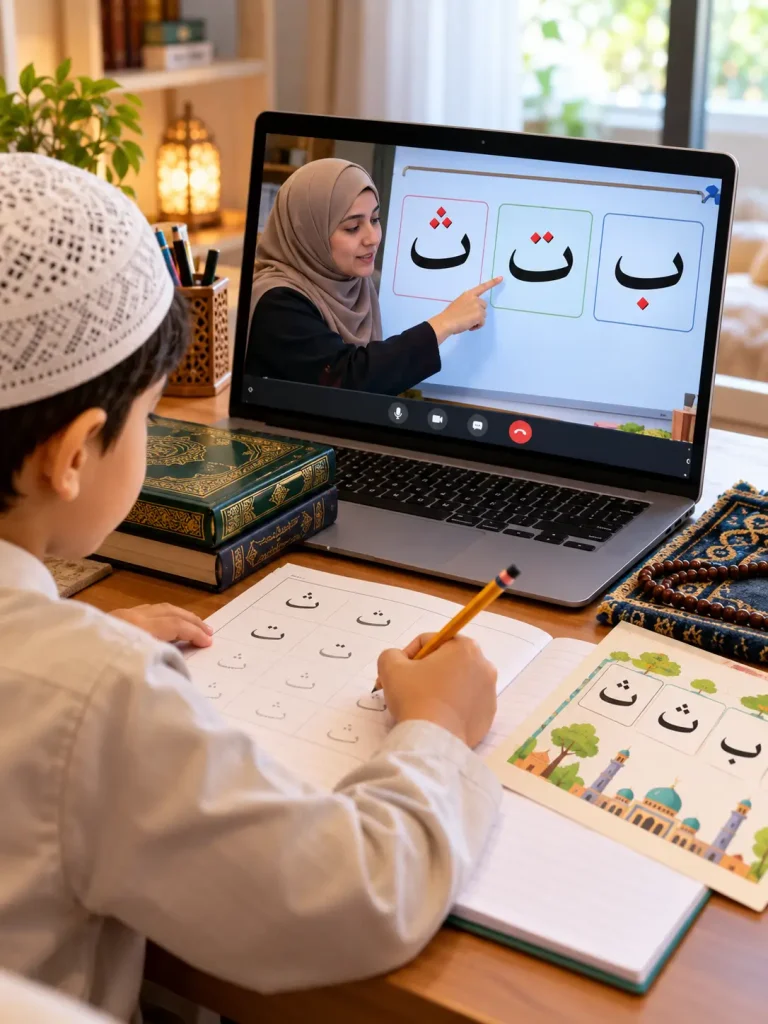
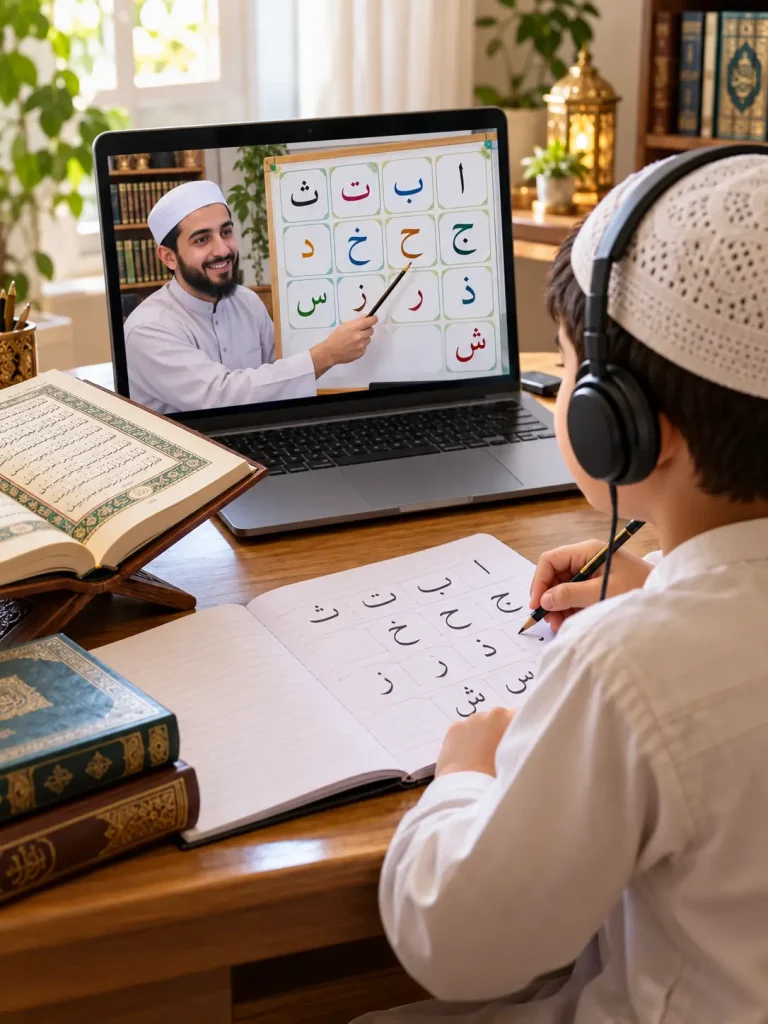
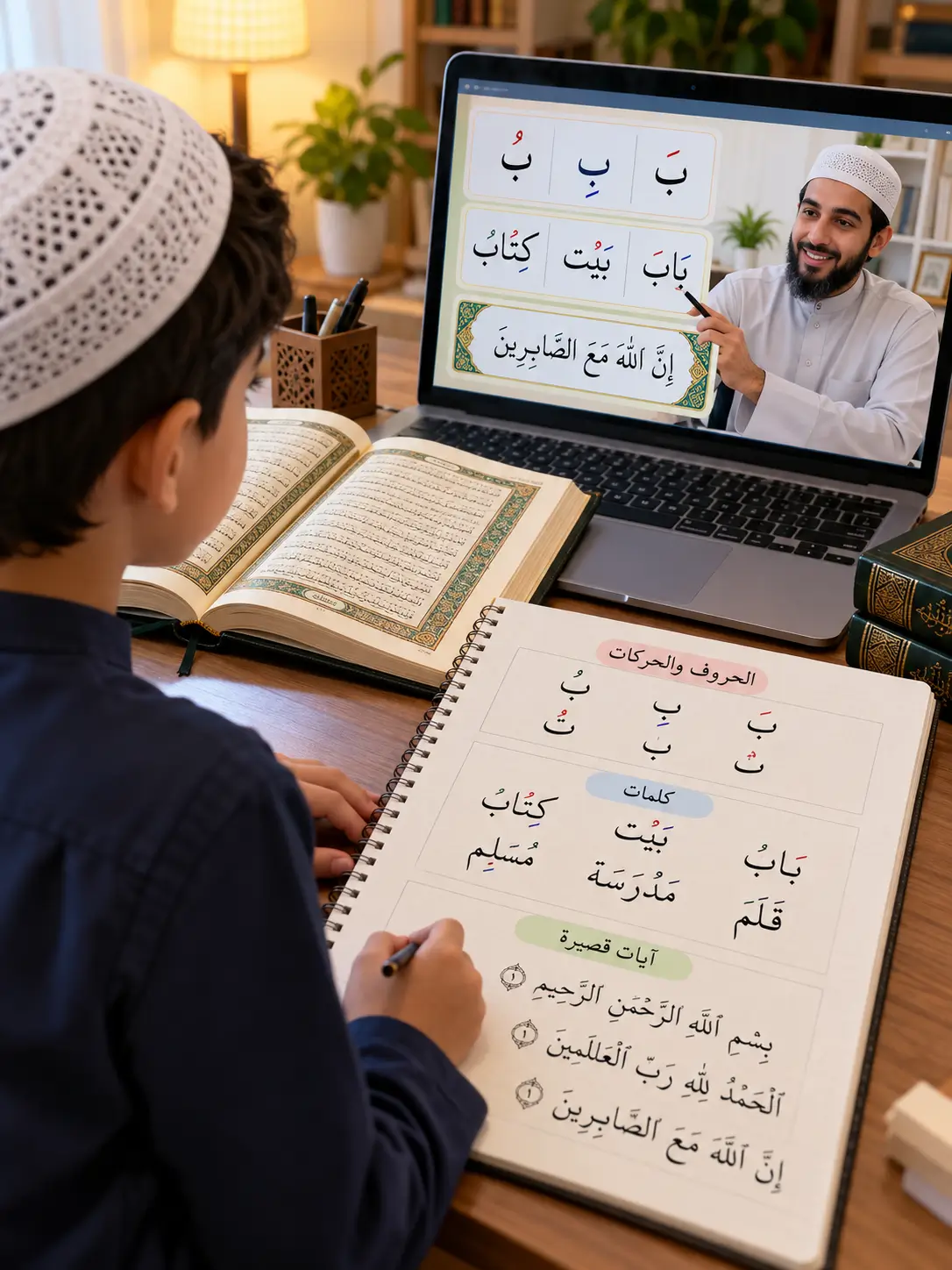
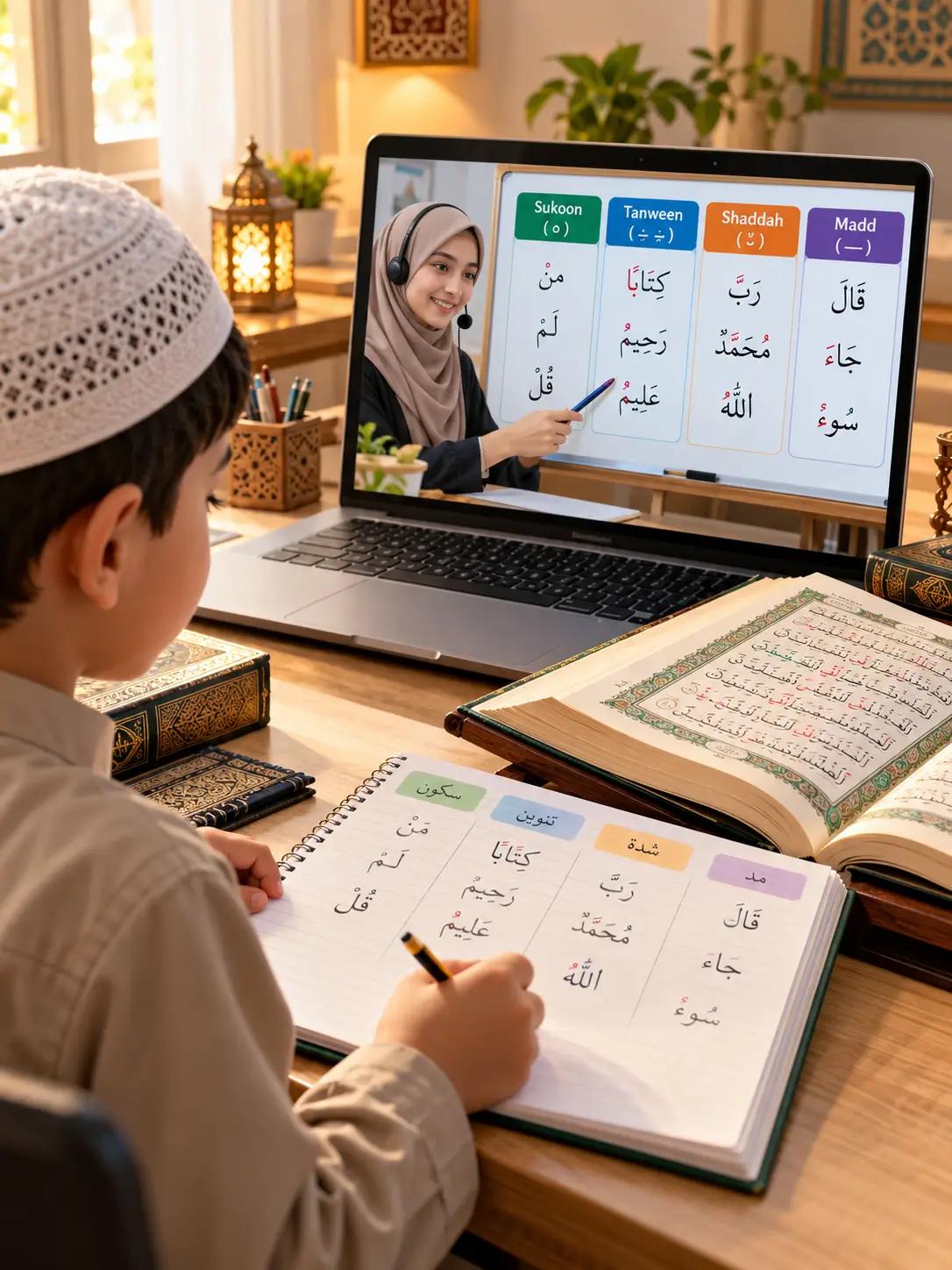
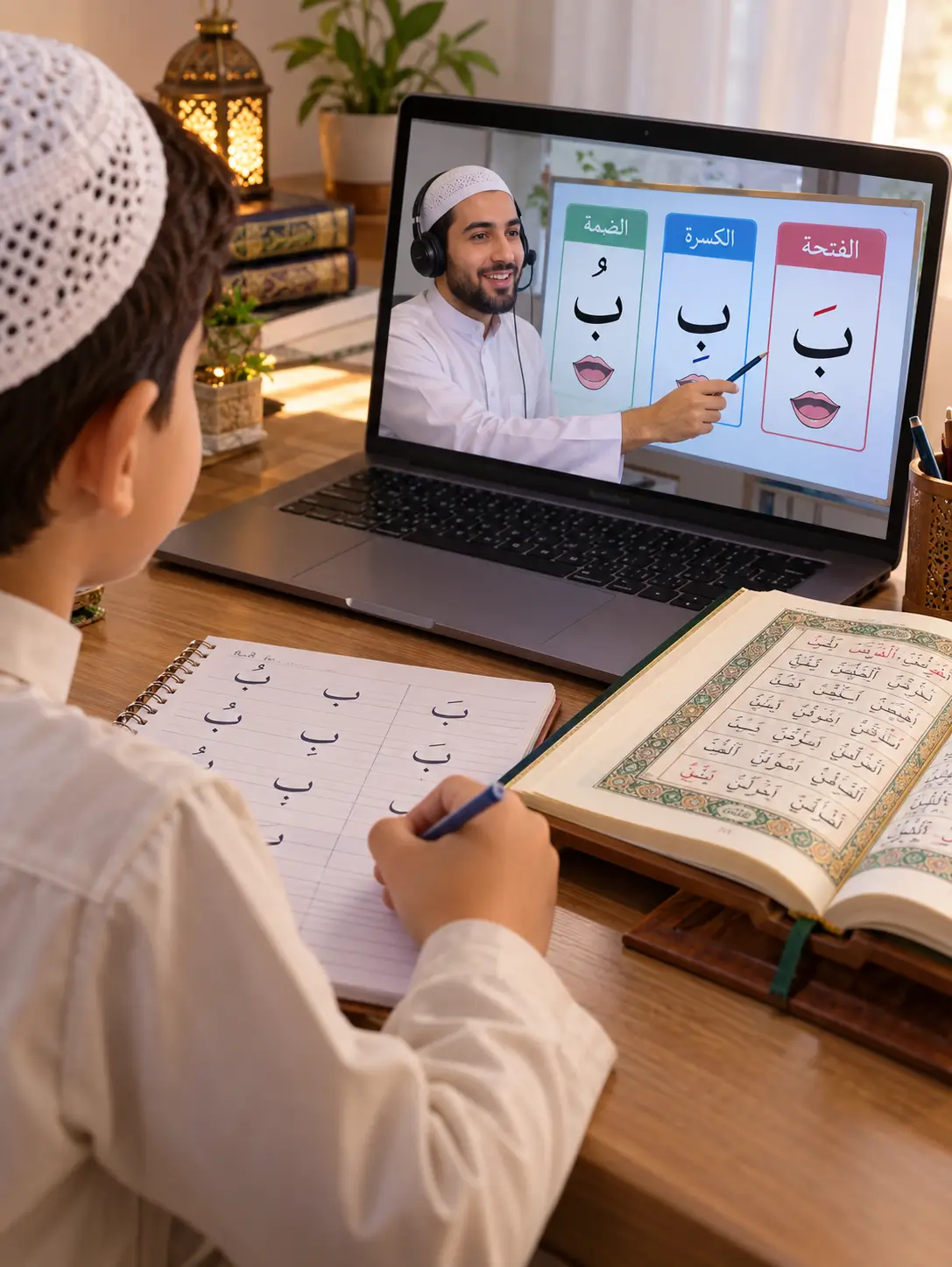
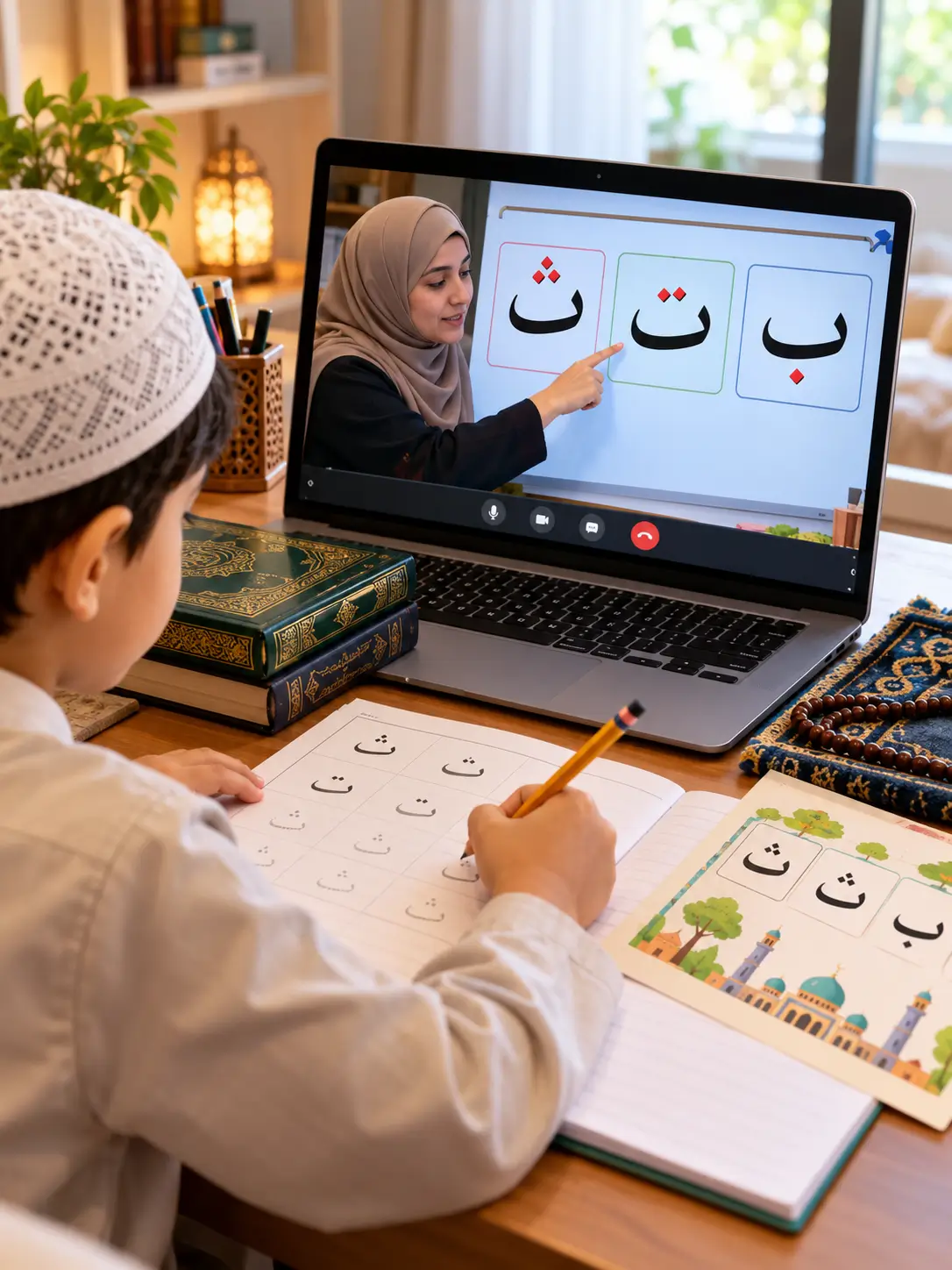
What Will My Child Learn in Online Quran Classes, Step by Step?
Every child’s route is a little different, but this is the path most young learners follow.



Which Quran Class Is Right for My Child?
The right Quran class depends on your child’s current reading level, Arabic familiarity, and learning goal. Use this simple guide to see which learning path may be the most suitable starting point.
| Your Child’s Starting Point | Suitable Learning Path | Main Focus | Typical Goal |
|---|---|---|---|
| New to Arabic letters | Noorani Qaida | Arabic letters, sounds, joining letters and basic reading skills | Build a strong foundation before moving into Quran reading |
| Knows some letters but struggles to read Quran | Quran Reading for Beginners | Letter recognition, word reading, pronunciation and reading practice | Become more comfortable and confident with Quran reading |
| Can already read but needs better pronunciation | Quran With Tajweed | Tajweed rules, correct pronunciation and recitation practice | Improve the accuracy and quality of Quran recitation |
| Reads Quran comfortably and wants to memorize | Quran Memorization | Memorization, repetition and consistent revision | Develop a structured and consistent Hifz routine |
| Wants Quran learning plus broader Islamic knowledge | Islamic Studies | Islamic knowledge, duas, manners and age-appropriate learning | Build a broader foundation alongside Quran education |
Who Are Our Online Quran Classes for Kids For?
Not sure your child is ready? The free trial class shows you in 30 minutes.
If your child already reads a little, the teacher finds the exact point where their reading stops and begins from there, so no time is spent repeating what they know. Brand new to Arabic letters? Start with Noorani Qaida.
Daughters can learn with a female teacher and sons with a male teacher, whichever you prefer. Mothers who would like to learn alongside their child can look at our Quran classes for ladies or adults classes.
Our lead teacher, Hafiz Umair Hameed, has 20 years of teaching experience, and you can read more about the team on our Teachers page.
How Much Do Online Quran Classes for Kids Cost?
Cost is usually a parent’s first question, so here is how it works before you message us. Fees depend on how many days per week your child attends, and the details are on our Fees & Schedule page.
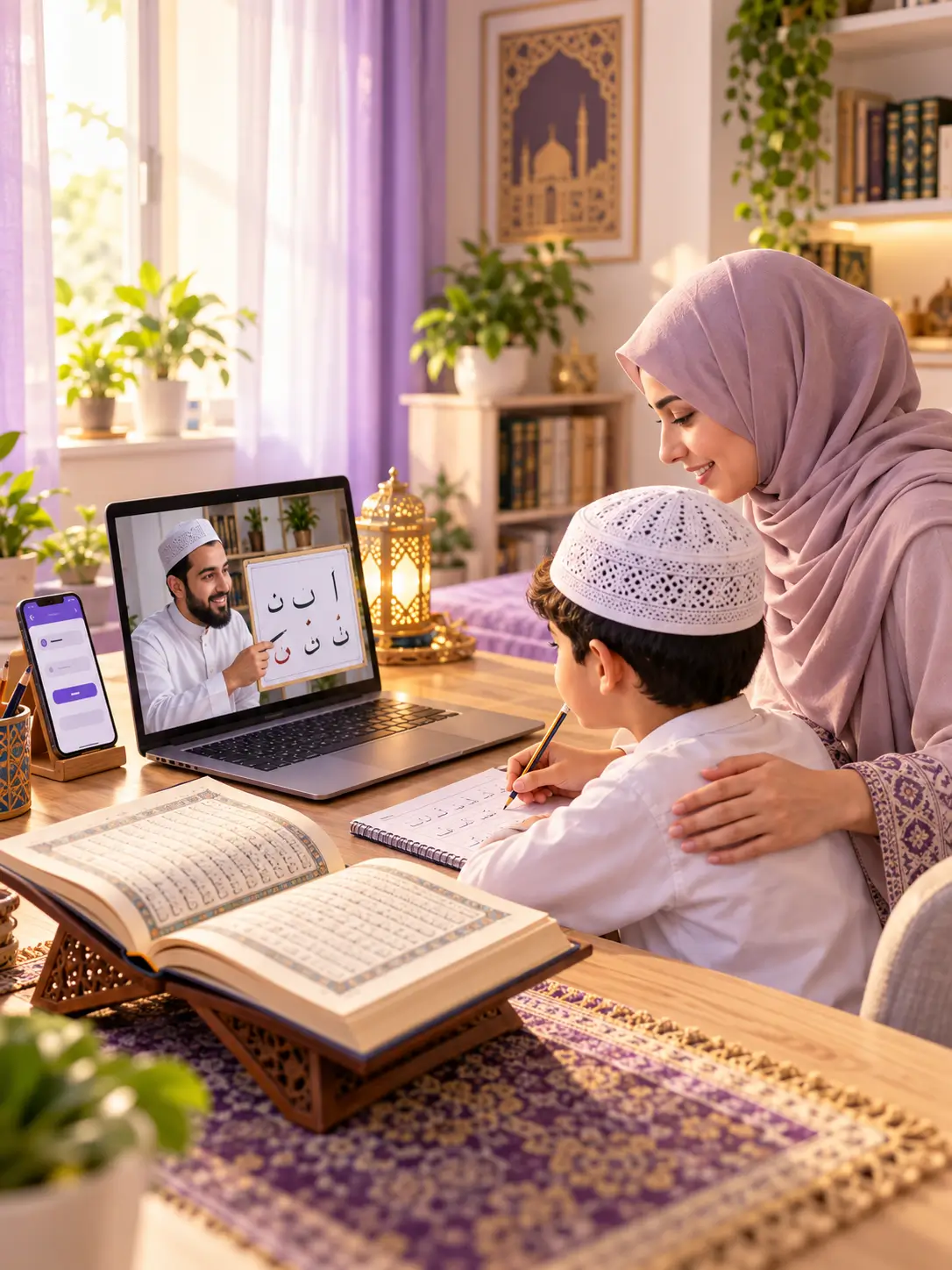
How the Online Quran Classes Work
Class Type
One-on-One
Class Duration
30 minutes
Age Level
At least 5 Years
Gender
Both Male/Female
(No Advance Payment)
What Families Appreciate About Our Kids Quran Classes
Parents often look for a Quran class that fits around school, keeps children engaged, and gives them individual attention. These feedback highlights reflect the themes shared around AlQuran Pro’s children’s Quran learning service.
The one-to-one format gives families a way to fit Quran learning around school, homework and other weekly activities instead of working around a fixed group timetable.
Families appreciate that a child can begin from their actual reading level rather than repeating lessons they already understand or struggling to keep pace with a group.
Private lessons give children more room to ask questions, repeat difficult sounds and practise Quran reading without the pressure of a larger classroom.
Parents value having a direct way to ask about courses, teacher preferences, schedules and the next step before starting regular Quran lessons.
Feedback themes on this page are presented as family learning highlights rather than attributed quotations. Individual experiences can vary according to a child’s age, starting level, attendance, practice and learning needs.
Common Questions About Online Quran Classes for Kids
Quick answers before you book your child’s first class.
Ready to Start Your Child’s Quran Journey?
One free trial class, no advance payment and no obligation to continue. Your child meets the teacher, you see how a lesson works and then you decide.